
Assessing Strata Leak Risk by Age and Climate in North Vancouver
Learn how building age and climate affect North Vancouver strata leak risk so you can make informed buying, selling, or investing decisions.
September 21, 2026
Buying or owning a strata home in North Vancouver means paying attention to more than the unit itself. A bright living room, renovated kitchen, or view of the inlet can be appealing, but the building’s relationship with rain, wind, groundwater, and salt air often tells a more important long-term story.
Moisture problems are common across the Lower Mainland, yet North Vancouver has a tougher set of conditions than many nearby communities. Annual rainfall is high. Hillside sites must manage surface and subsurface water. Waterfront and exposed locations deal with wind-driven rain and marine air. A building envelope that performs adequately in a sheltered, low-rainfall setting may be under far more pressure here.
For anyone involved in North Vancouver real estate, whether buying, selling, managing, or investing, leak risk should be assessed through two lenses: the building’s age and its climate exposure. Neither factor tells the whole story on its own. Together, they can reveal where expensive problems may be developing.
Why North Vancouver Buildings Face Higher Moisture Exposure
Water is normal. Buildings are supposed to handle it. The issue begins when rainwater, groundwater, condensation, or plumbing leaks get past the layers meant to keep a structure dry.
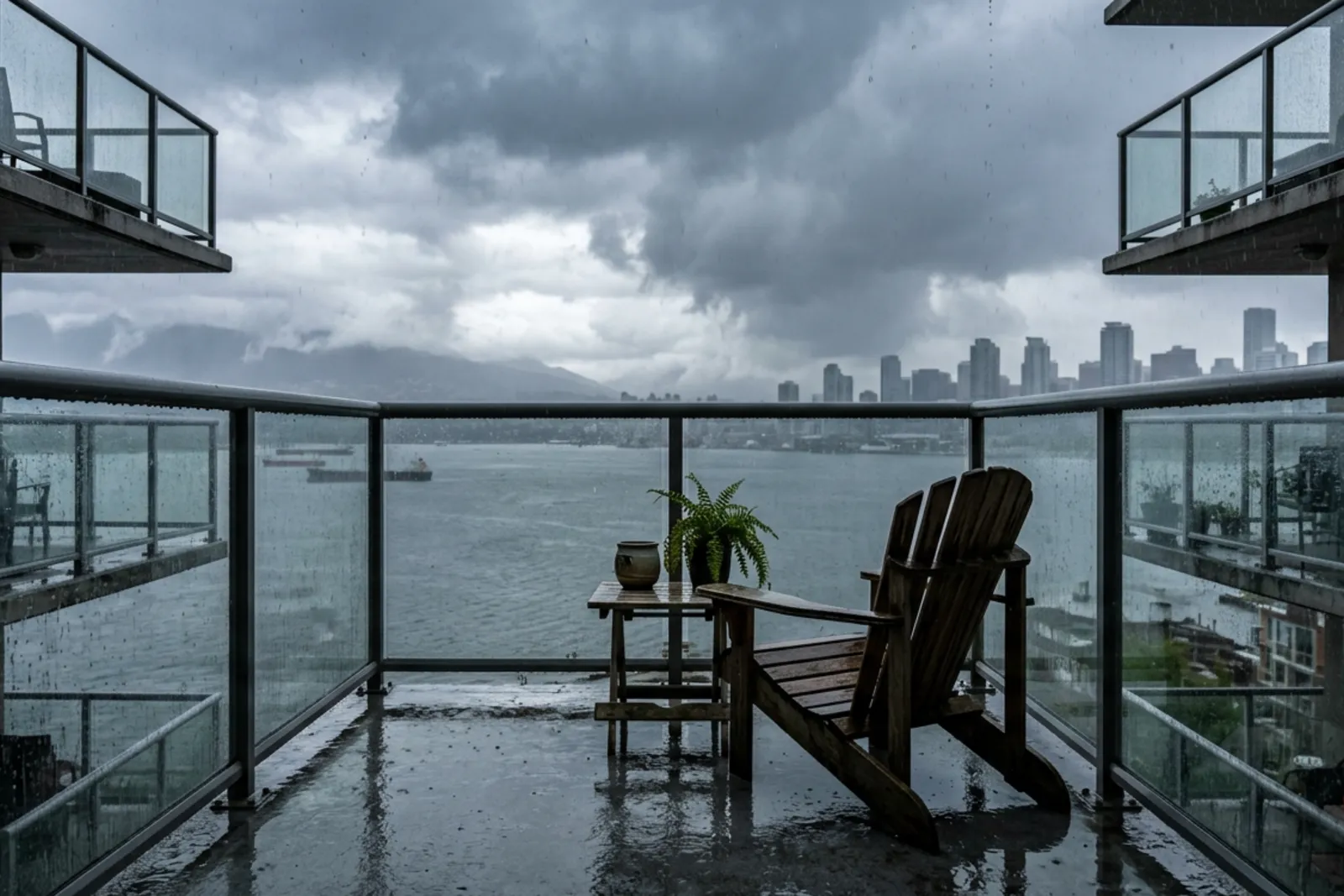
North Vancouver’s coastal mountain environment creates frequent wet conditions. Rain does not always fall straight down, either. Wind can push water against walls, windows, balcony doors, vents, roof intersections, and cladding transitions. This is known as wind-driven rain, and it is especially demanding on buildings near the waterfront, on open slopes, or in locations with limited protection from trees or nearby structures.
A building does not need a dramatic storm to develop a leak. Repeated smaller rain events can gradually wear down sealants, expose weak flashing details, and overwhelm poorly designed drainage paths. One rainy week may not reveal much. Several wet winters certainly can.
Local site conditions add another layer of complexity. Many strata properties are built on or near slopes, where water naturally moves downhill through soil and along retaining walls. If surface drainage is poor, water can collect beside foundations. If groundwater is moving toward the building, lower-level units, storage areas, parkades, and elevator pits may experience recurring dampness or seepage.
Then there is salt air. Buildings closer to Burrard Inlet and other marine areas can experience faster corrosion of metal elements, including window-frame components, fasteners, railings, and balcony hardware. Corrosion can look minor at first, but it may weaken connections and create openings where water can enter.
Building Age Matters, But It Is Not a Verdict
Age is a useful clue, not a final diagnosis. A well-maintained 35-year-old building may be a safer purchase than a newer building with neglected drainage, poor detailing, or deferred repairs.
Still, different eras of construction tend to carry different questions.
Older Buildings: Maintenance History Becomes the Main Issue
Older strata buildings have had more time for materials to wear out. Sealants harden and crack. Flashing may corrode. Drainage systems can clog. Roofs and membranes approach or exceed their expected service lives. Windows may lose their effectiveness around frames, sills, or perimeter joints.
In a rainy area, small maintenance gaps can become major water problems. An aging caulk joint is rarely just a cosmetic concern when it sits around a window exposed to wind-driven rain all winter.
For buildings several decades old, buyers and strata councils should look carefully at the repair history. Have balconies been renewed? Was the roof replaced? Have windows been updated? Was there a building-envelope rehabilitation project? Were parkade membranes repaired? Are drainage systems cleaned and inspected regularly?
A building with clear records, completed capital projects, and realistic reserve planning may be in solid shape. A building with vague meeting minutes, recurring leak complaints, and a low reserve fund deserves a much closer look.
Buildings From High-Risk Envelope Eras
Some condominium buildings in coastal British Columbia were constructed during periods when rain-screen design, drainage-plane details, and exterior wall practices were less reliable than they are today. This does not mean every building from those years has problems. It does mean buyers should avoid assuming that newer-looking exterior finishes equal good moisture performance.
Stucco-clad buildings often receive extra scrutiny because certain wall assemblies were vulnerable when water entered behind the exterior finish and could not drain or dry effectively. Repairs can be extensive because the issue may involve concealed framing, sheathing, insulation, windows, balconies, and flashing.
The right question is not simply, “Is this a stucco building?” Ask what wall system it has, whether it was professionally investigated, whether repairs were completed, and whether there is documentation explaining the scope of work.
Newer Buildings Still Need Investigation
A newer strata property can have fewer age-related wear issues, but it is not immune to leaks. Construction defects, incomplete detailing, damaged membranes, poorly installed windows, blocked drains, and inadequate grading can appear early in a building’s life.
Modern construction standards have improved moisture management, but construction quality still varies. A newer building may also have more complex architectural features, such as large window walls, recessed balconies, rooftop terraces, decorative projections, and mixed cladding materials. Those details can create more transitions and joints, which are often where water finds its way in.
A clean inspection report, a functioning warranty process, and a record of prompt repairs are encouraging signs. They should not replace careful due diligence.
The Climate and Site Conditions That Raise Leak Risk
The same building design can perform differently depending on where it sits. In North Vancouver, site exposure matters a great deal.
Hillside Sites and Below-Grade Water
Hillside properties need thoughtful drainage. Water running down a slope may pool behind retaining walls, enter poorly maintained perimeter drains, or place pressure on below-grade walls. Parkades are especially vulnerable because they sit below surrounding grade and often cover a large footprint.
Signs of trouble may include recurring puddles in the parkade, white mineral deposits on concrete, peeling paint, rust stains, musty odors, water at wall-to-slab joints, or regular use of fans and dehumidifiers. One small damp patch does not always point to a serious issue, but persistent moisture should never be shrugged off as “normal for an underground garage.”
Below-grade repairs can be disruptive and costly. The source may involve failed waterproofing, cracks, drainage problems, plumbing, or groundwater. Finding the source before planning repairs matters. Guesswork can lead to repeated patch jobs that do not solve the problem.
Waterfront and Exposed Locations
Waterfront views come with environmental exposure. Wind-driven rain can strike elevations that might stay relatively dry in more sheltered areas. Salt particles in the air may speed up corrosion, particularly where metal components remain damp or are poorly protected.
Balcony railings, fasteners, window frames, sliding doors, and exterior fixtures deserve attention in these locations. Rusted screws or corroded metal may sound like a small maintenance item, but they can signal that water and salt have been working on hidden areas too.
Buildings with large balconies and expansive glazing may also have more joints, door thresholds, and drainage points to maintain. These features are not inherently problematic. They simply need regular inspection and timely repairs.
Balcony and Deck Systems
Balconies are one of the most common leak locations in strata buildings. They sit outdoors year-round, receive heavy rain, and often include penetrations for railings, doors, drains, planters, or fixtures. Water that gets below a membrane can travel before it becomes visible inside a unit below.
At higher elevations, freeze-thaw cycles can add stress. Water enters a small crack, freezes, expands, and makes the opening larger. Over time, membrane damage and concrete deterioration can become harder to ignore.
When reviewing a building, look for signs such as cracked surfaces, ponding water, damaged coatings, missing sealant, rust staining, loose tiles, blocked drains, or repairs around balcony edges. Ask whether balconies have been assessed as part of the building’s maintenance program, rather than only repaired after a leak appears.
What a Proper Leak Investigation Can Reveal
Visible stains are usually the end of the story, not the beginning. Water can travel along framing, pipes, concrete slabs, or electrical penetrations before it appears on a ceiling or wall. The location of the stain is not always the location of the entry point.
A targeted leak investigation uses evidence to trace the actual path of moisture. Depending on the problem, this may include moisture testing, thermal imaging, controlled water testing, visual review of exterior details, and examination of plumbing or drainage systems.
Thermal imaging can help identify temperature differences that may indicate wet materials or air leakage. Moisture meters can assess whether finishes or building materials hold elevated moisture. Neither tool works as magic. Both need to be interpreted by someone who understands construction and the limits of the equipment.
For example, a cold patch behind a wall may indicate moisture, but it might also be insulation variation or an air gap. A good investigation compares multiple clues before reaching a conclusion.
Unit-to-unit leak tracing is useful when a ceiling stain in one home may be connected to a bathroom, kitchen, laundry area, balcony, or plumbing line in another. Parkade leak detection focuses on below-grade slabs, walls, joints, drains, and potential groundwater pathways. Balcony leak testing looks closely at membrane performance, transitions, door thresholds, drainage, and penetrations.
The goal is simple: identify the source, document the evidence, and recommend repairs that address the actual cause.
Due Diligence Questions for Buyers
A home inspection is valuable, but it may not be enough when there is a known history of water entry or a building has higher climate exposure. Buyers should read available strata documents carefully and ask direct questions.
Useful questions include:
Have there been recurring water leaks, insurance claims, or special assessments related to the building envelope, balconies, roof, windows, parkade, or plumbing?
What major repairs have been completed, and are engineering reports, warranties, invoices, or permits available?
Does the depreciation report identify upcoming work involving exterior walls, drainage, roofing, balconies, windows, or parkade waterproofing?
Are there recurring complaints from lower-level units, units below balconies, or homes on the most exposed sides of the building?
Has the building had issues with blocked drains, retaining walls, groundwater, flooding, or water entering the parkade?
Is the contingency reserve fund realistic for the building’s anticipated repair needs?
Meeting minutes are often revealing. Look for repeated references to leaks, mold, drainage, insurance deductibles, water testing, consultant reports, temporary repairs, or disputes about responsibility. One isolated event may be routine. Repeated references over several years deserve attention.
For a purchase with meaningful uncertainty, an independent building-envelope assessment or insurance-grade investigation may be worth the cost. It can help a buyer understand whether they are looking at a manageable maintenance item or the possibility of a major special levy.
What Sellers and Property Managers Should Document
Sellers benefit from clarity. A previous leak is not automatically a deal-breaker, especially if it was investigated and repaired properly. The bigger concern is incomplete information.
Keep records of the cause, repair scope, contractor invoices, photographs, warranties, and any follow-up testing. If a plumbing leak affected a unit, documentation showing that the pipe was repaired and materials were dried properly can reduce uncertainty for a future buyer.
For a property manager, consistent documentation supports better decisions for the entire strata. Moisture incidents should be tracked by location, date, weather conditions, suspected source, repair action, and recurrence. Over time, patterns become visible. Several leaks on one façade, for example, may point to an envelope issue rather than separate random events.
Insurance-grade reports are particularly useful when a claim, dispute, major remediation project, or reserve fund decision is involved. They give adjusters, engineers, owners, and councils a common factual record to work from.
A Practical Way to Think About Risk
Leak risk is rarely a simple pass-or-fail question. Think of it as a combination of exposure, condition, and response.
A 1980s building on an exposed hillside with aging balconies, recurring parkade seepage, and limited reserve funds has a higher-risk profile than a similar-aged building with completed envelope work, updated membranes, documented drainage maintenance, and a healthy reserve fund.
Likewise, a newer waterfront building may still deserve close attention if salt corrosion appears early, balcony drains clog, or water enters around doors during storms.
The goal is not to avoid every building with a past repair or a rainy location. That would rule out a large part of Vancouver real estate. The goal is to understand what has happened, what has been fixed, what remains, and who will pay if more work is needed.
In North Vancouver, water is part of the environment. A careful review of age, construction, exposure, maintenance records, drainage, balconies, and below-grade conditions turns that reality into something far more manageable.
Thinking about your next move?
Let's talk it through, no pressure, no obligation.
Book a Consultation