
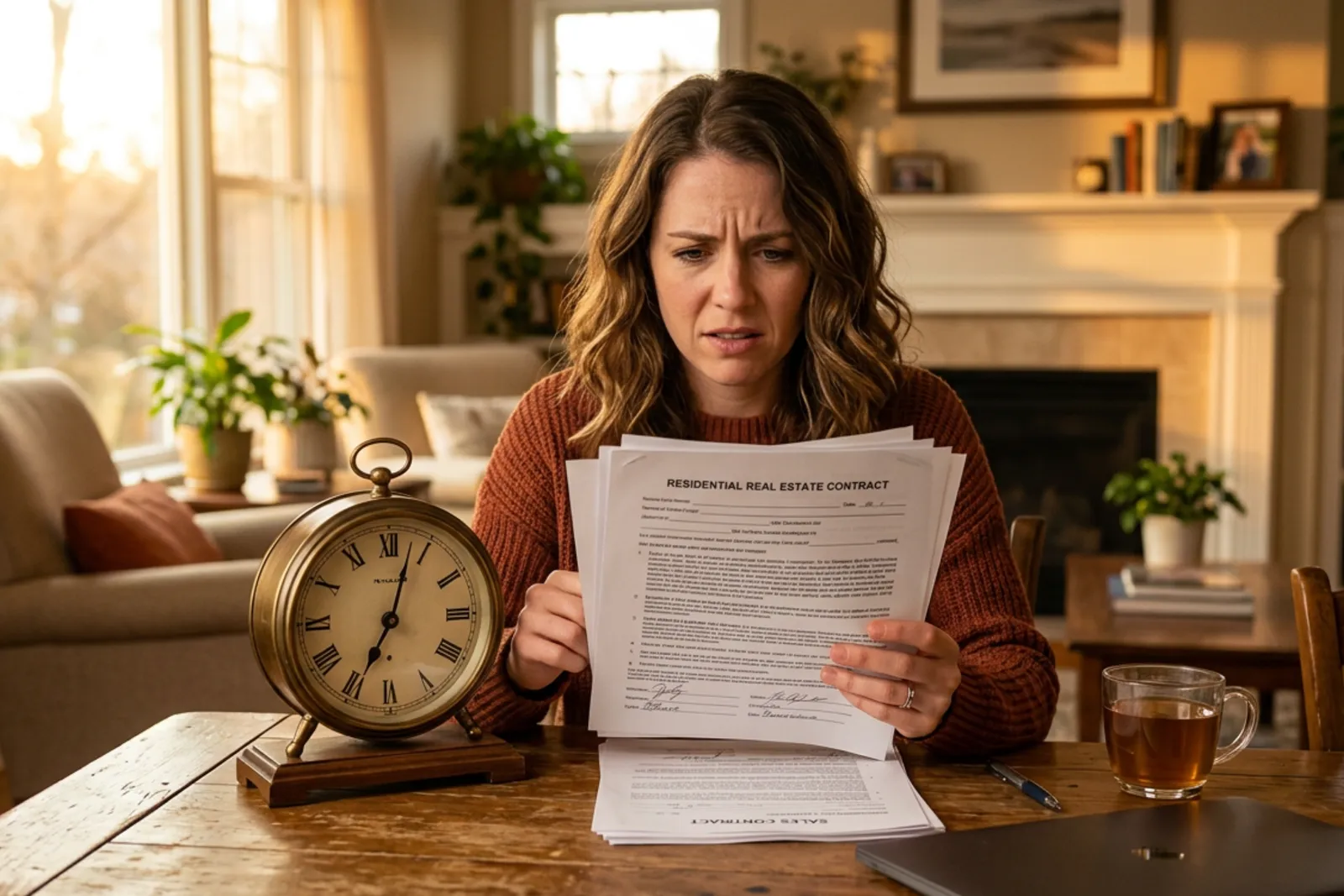
BC Home Buyer Rescission Period: A Practical Step-by-Step Guide
Learn how BC’s home buyer rescission period works, including deadlines, eligibility and costs. Read this practical guide before you buy.
September 9, 2026
Buying a home in British Columbia can move quickly. An offer is drafted, negotiations happen, signatures are exchanged, and suddenly you have a binding contract to purchase a property. It is a lot to process, especially when the purchase involves a major financial commitment, financing questions, inspection concerns, or strata documents that need a closer look.
B.C.’s Home Buyer Rescission Period gives purchasers of certain residential properties a short statutory window to step back from a completed contract. The rule is sometimes called a “cooling-off period,” though that phrase can make it sound simpler than it is. The deadline is short, the process has formal requirements, and exercising the right comes with a cost.
This guide explains how the rescission period works under section 42 of the Property Law Act and the Home Buyer Rescission Period Regulation, B.C. Reg. 175/2022. It is educational information, not legal advice. If you are considering rescinding a contract, get prompt advice from a real estate lawyer because timing matters enormously.
What is the B.C. home buyer rescission period?
The Home Buyer Rescission Period Regulation took effect on January 3, 2023. It sets out the rules for a purchaser’s statutory right to cancel certain contracts for residential real property.
For qualifying transactions, a buyer has three business days to rescind an accepted purchase contract. In practical terms, that means the buyer can withdraw from the deal during the prescribed period, even if the contract does not contain a subject condition that allows cancellation.
This protection cannot be waived. A contract cannot lawfully remove a qualifying buyer’s rescission right under section 42(1) of the Property Law Act.
That said, the rescission period is not a free trial of a home purchase. A buyer who rescinds must pay the seller 0.25% of the purchase price. On a $1,000,000 purchase, that amount is $2,500. On a $2,000,000 purchase, it is $5,000. That is enough money to make a pause worthwhile before writing an offer, especially in active Vancouver real estate and Lower Mainland markets where decisions can feel rushed.
Which properties are covered?
The rescission right applies to many common home buying transactions involving residential real property. The definition includes:
Detached and semi-detached homes
Townhouses
Apartments in duplexes and other multi-unit dwellings
Residential strata lots, including most condominiums
Manufactured homes affixed to land
Certain cooperative interests that include a right to occupy a dwelling
That broad scope means the rule is relevant to many buyers looking at North Vancouver real estate, West Vancouver condos, Burnaby townhomes, Coquitlam family homes, and other residential properties across the Lower Mainland.
A property’s parcel identifier, often called a PID, may be useful when identifying the property in formal documents. It is a permanent identifier assigned through B.C.’s land title system. Your contract will usually contain the legal description and may include the PID.
Transactions that are exempt
The rescission right does not apply to every residential purchase. The regulation excludes several types of transactions:
Residential real property located on leased land
Leasehold interests in residential real property
Properties sold at auction
Properties sold under a court order or under court supervision
These exclusions are important because the type of land tenure can be easy to miss. A home may look much like a conventional property while carrying a leasehold interest or sitting on leased land. Buyers should read the title, listing information, and contract carefully instead of assuming the rescission protection applies.
Court-ordered sales also have their own procedures. A buyer may submit an offer, but court approval is often required and other bidders may have an opportunity to compete at the approval hearing. It is a very different buying process.
For presale homes, the rules can be more complicated. A presale purchase may have a separate cancellation right under the Real Estate Development Marketing Act. Do not assume the three-business-day rescission period is the only deadline that matters. Review the disclosure statement and get legal advice before signing.
What counts as a business day?
For the purposes of the rescission provision, “days” means business days. The regulation defines a business day as any day other than a Saturday or a statutory holiday.
This definition catches people off guard because Sunday is not listed as an excluded day in the regulation’s definition. More importantly, statutory holidays can interrupt the calculation. A long weekend may change the practical deadline you thought you had.
Do not calculate the final day casually. Confirm the date and time the contract became accepted, identify any relevant statutory holidays, and ask a lawyer to verify the deadline if there is any doubt. Missing the rescission deadline by even a few minutes can have serious consequences.
Step 1: Confirm that you have an accepted contract
The rescission period concerns a completed contract to purchase qualifying residential real property. Before deciding what to do, make sure you know exactly when the offer was accepted and when acceptance was communicated.
Save the documents and messages that establish the timeline, including:
The signed contract of purchase and sale
Counteroffers and addenda
Emails or electronic-signing records
Messages confirming acceptance
Deposit instructions
Any subject removal documents, if applicable
This paper trail matters because the rescission period is time-sensitive. A vague recollection that an offer was accepted “sometime yesterday” is not enough when you are trying to meet a statutory deadline.
Step 2: Check whether the property and transaction qualify
Before preparing a notice, determine whether the property is covered by the rescission provision or falls within an exemption.
Start with the contract. Look for the property address, legal description, PID, tenure information, and terms of sale. Is the land freehold, leasehold, or located on leased land? Is it an auction purchase? Is there a court order involved?
If you are unsure, do not wait until the last day to investigate. A real estate lawyer can review the contract and title information quickly when necessary, but they need enough time to give meaningful advice.
Step 3: Decide whether rescission is the right option
A rescission right gives buyers breathing room, but it should not replace careful due diligence before making an offer.
Buyers often use the period to take a second look at issues that became more urgent after acceptance. Financing may not be as secure as expected. An inspection concern may feel more significant after reflection. A buyer of a strata property may find something troubling in the minutes, depreciation report, bylaws, budget, or insurance documents.
Still, there is a meaningful difference between rescinding and relying on a subject clause.
A subject condition, such as a financing or inspection condition, can allow a buyer to end the contract if the condition is not satisfied, depending on the wording of the contract and the facts. The rescission period is a separate statutory right that carries the 0.25% payment.
When possible, buyers should not treat the rescission period as a substitute for appropriate conditions. In a competitive market, there can be pressure to write offers with fewer subjects. That pressure is real. So is the financial risk of waiving protections before you have reviewed the information needed to make an informed decision.
Step 4: Prepare a valid notice of rescission
If you choose to rescind, the notice must contain specific information. A casual text message saying “I want out of the deal” is a bad idea. The regulation requires a notice of rescission to include:
The address, parcel identifier, or another description of the residential property.
The name of the purchaser exercising the right.
The purchaser’s signature or electronic signature.
The name of every seller who is a party to the contract.
The date the rescission right is being exercised.
Use the names exactly as they appear in the contract. If two buyers signed, confirm whether both purchasers should sign the notice. If there are multiple sellers, include each seller party named in the agreement.
Accuracy matters. There is no benefit in trying to write a dramatic explanation or argue the merits of your decision. The notice should be clear, complete, and focused on the required details.
Step 5: Serve the notice using a permitted method
The regulation sets out methods by which a notice is deemed served, provided the contract contains the relevant seller contact information.
A purchaser may serve the notice by:
Registered mail to the seller’s address shown in the contract
Fax to the seller’s fax number shown in the contract
Email to the seller’s email address shown in the contract, with a requested read receipt
If the notice is sent or transmitted according to these methods, it is deemed served when it is sent or transmitted. This is a significant rule. You do not necessarily need to wait for the seller to reply, acknowledge receipt, or agree with the rescission.
Even so, do not rely on a last-minute email without documenting it properly. Keep a copy of the notice, the email address used, the sent timestamp, the requested read-receipt record, and any delivery confirmation. If using registered mail or fax, retain the mailing receipt or transmission confirmation.
The notice may be served on a business day or on another day. But again, the deadline itself remains the central issue. A buyer should act well before the final moment whenever possible.
Step 6: Understand the 0.25% rescission payment
A buyer who rescinds must promptly pay the seller an amount equal to 0.25% of the purchase price stated in the contract.
Here is the calculation:
Purchase Price0.25% Rescission Amount$750,000$1,875$1,000,000$2,500$1,500,000$3,750$2,500,000$6,250
If the seller, or someone acting on the seller’s behalf, has received a deposit, the 0.25% amount must be paid to the seller from that deposit. The remaining deposit amount must then be promptly returned to the buyer.
For example, assume a buyer agrees to purchase a condo for $900,000 and pays a $45,000 deposit. The rescission amount is 0.25% of $900,000, or $2,250. That $2,250 goes to the seller. The remaining $42,750 of the deposit should be promptly returned to the buyer.
Where deposit funds are held in a brokerage trust account, the regulation permits money to be withdrawn for the required payment to the seller and for the return of the balance to the purchaser.
A buyer should still obtain written confirmation of how the deposit is being handled. Keep records of the deposit receipt, rescission notice, calculation, and any trust-account disbursement.
A simple rescission checklist
When the decision is made, move carefully but quickly:
Confirm the contract acceptance date and calculate the three-business-day period.
Check whether the property or transaction falls into an exempt category.
Speak with a real estate lawyer if there is any uncertainty.
Prepare a notice containing every item required by the regulation.
Use a service method recognized in the contract and regulation.
Keep proof that the notice was sent or transmitted before the deadline.
Confirm the 0.25% amount and the deposit return process in writing.
The practical lesson for buyers
The B.C. rescission period gives home buyers a meaningful but narrow safeguard. It recognizes that a residential purchase is often made under pressure, with incomplete information and a lot of emotion in the room. That part is understandable. Homes are personal, and the numbers are large.
But three business days pass quickly. Buyers should use that time with intention. Review financing. Re-read the contract. Look at inspection findings. For strata homes, work through the documents instead of skimming them late at night. Ask direct questions. If something does not make sense, get legal advice before the deadline expires.
The rescission period can provide a way out of a qualifying purchase contract, but it comes at a set cost and requires precise action. A well-prepared buyer will ideally never need to use it. If they do, they will be glad they understood the rules before the clock started running.
Thinking about your next move?
Let's talk it through, no pressure, no obligation.
Book a Consultation